
September 11, 2026
Signs Your Car Exhaust System Needs Replacing
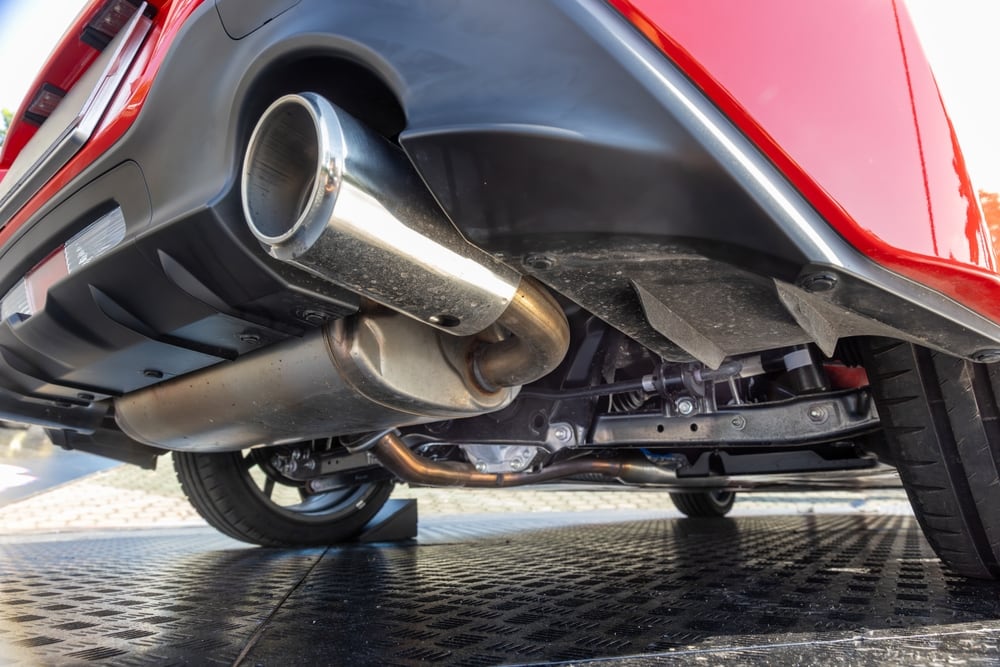
Your car’s exhaust system works every time you start the engine. It carries exhaust gases away from the engine, reduces noise, and helps limit harmful emissions. When part of the system fails, you may hear, smell, or feel the difference.
Learning the signs your car exhaust system needs replacing can help you catch problems early. It can also help you decide whether to repair one part, replace several components, or stop putting money into an older vehicle.
Quick Overview of the Exhaust System
The exhaust system controls where engine gases travel and how they leave your vehicle. Its main parts include the exhaust manifold, oxygen sensors, catalytic converter, muffler, exhaust pipes, and tailpipe.
The exhaust manifold collects gases from the engine. Oxygen sensors monitor those gases, while the catalytic converter reduces harmful emissions. The muffler lowers exhaust noise, and the pipes direct gases out behind the vehicle.
A working system keeps exhaust fumes away from the passenger cabin. This makes exhaust problems a safety concern as well as a mechanical issue.
Top Signs Your Exhaust System Needs Replacing
Exhaust leak symptoms can overlap with other vehicle problems. Pay attention to when each symptom occurs and have a professional inspect the vehicle before approving major repairs.
1. Loud Engine Noise or Unusual Exhaust Noise
A sudden increase in noise is one of the clearest bad muffler symptoms. You may hear a deep rumble, roar, hiss, or tapping sound when the engine runs. The sound may grow louder when you accelerate.
A hole in the muffler or exhaust pipe can let gases escape before they reach the tailpipe. A cracked exhaust manifold or failed manifold gasket may cause ticking or hissing near the engine. Loose parts can also create rattling noises beneath the car.
Do not assume every loud sound comes from the exhaust. Our guide to common car noises and what they mean can help you identify other possible causes. Have worsening sounds inspected promptly.
2. Exhaust Fumes Inside the Cabin
Exhaust odors inside your car require immediate attention. Pull over safely, shut off the engine, and get everyone into fresh air. Arrange for professional help instead of continuing to drive.
Carbon monoxide is a colorless, odorless gas found in vehicle exhaust. You cannot depend on smell alone to detect it. Other exhaust gases may produce a strong or unusual odor that warns you about a leak.
A rotten-egg or sulfur smell can be linked to catalytic converter trouble, an overly rich fuel mixture, or another engine problem. The smell alone does not confirm catalytic converter failure. A mechanic needs to identify its source.
3. Visible Rust, Holes, or Exhaust Pipe Damage
Wait until the vehicle is parked on a level surface and completely cool before looking at the exhaust. From a safe position, check for heavy rust, holes, cracks, black soot, or sections hanging lower than normal.
Rust can weaken a muffler or pipe until it develops a leak. Black soot near a joint may show where gases are escaping. Scraping marks can mean the pipe or muffler has been hitting the road.
Take photos of visible damage to share with repair shops. Never crawl beneath a vehicle supported only by a jack, touch warm exhaust parts, or reach near moving engine components.
4. Check Engine Light and Catalytic Converter Problems
Exhaust problems may cause the Check Engine light to turn on. A shop can scan the vehicle’s onboard computer for diagnostic trouble codes. Codes such as P0420 or P0430 may point to low catalytic converter efficiency.
These codes do not prove that the converter must be replaced. Damaged oxygen sensors, exhaust leaks, misfires, or fuel-system problems can produce similar warnings. Replacing a converter without fixing the original cause may lead to another failure.
Other possible signs of a clogged or damaged converter include poor acceleration, lost engine power, excessive heat, rattling, or a failed emissions test. Ask for a full diagnosis before approving an expensive replacement.
5. Lower Fuel Economy
A damaged exhaust system can affect fuel efficiency. A leak near an oxygen sensor may cause inaccurate readings, which can interfere with the engine’s air-fuel balance. A restricted converter may also force the engine to work harder.
Track your recent miles per gallon if you suspect a change. Bring that information to the repair shop. Low tire pressure, driving habits, weather, and other engine problems can also reduce fuel economy, so an MPG drop is only one clue.
6. Vibrations, Rattling, or Scraping
A loose exhaust part may vibrate against the underside of the car. Note whether the vibration happens while idling, accelerating, turning, or driving over bumps.
Common causes include loose heat shields, damaged hangers, broken clamps, and failing muffler parts. Material inside a damaged catalytic converter may also rattle.
A hanging pipe can scrape the road or separate from the vehicle. If part of the exhaust is dragging, stop driving and arrange for a tow.
7. Burning Smells, Excessive Heat, or Smoke
Pull over if you notice a strong burning smell, smoke, or a fast rise in engine temperature. Turn off the engine and allow the vehicle to cool. Do not open a hot radiator cap or touch the exhaust system.
Leaking fluids can burn when they reach hot exhaust parts. A manifold gasket leak may also release hot gases inside the engine compartment. However, smoke and overheating often come from engine or cooling-system problems rather than the exhaust itself.
Because these symptoms can signal several serious problems, professional diagnosis is the safest next step.
How Exhaust Problems Are Inspected and Diagnosed
You can document noises, odors, warning lights, and visible damage without attempting a repair. Write down when each symptom began and whether it changes during acceleration, idling, or cold starts.
A mechanic can raise the vehicle safely and inspect the manifold, pipes, muffler, converter, joints, clamps, and hangers. The shop may also scan trouble codes, review oxygen-sensor data, measure exhaust pressure, or perform a smoke test to locate a small leak.
Ask for a written report that identifies the failed part and explains why it needs repair or replacement. This can help you compare quotes and avoid paying for parts that still work.
Should You Repair or Replace the Exhaust System?
One exhaust problem does not always require an entirely new system. A shop may be able to replace a failed gasket, hanger, clamp, muffler, pipe section, oxygen sensor, or catalytic converter.
A limited repair may make sense when the damage affects one part and the rest of the system is solid. Replacement becomes more likely when there are multiple holes, widespread corrosion, repeated leaks, or several weak components.
Ask whether the estimate uses stainless steel, aluminized steel, original equipment, or aftermarket parts. Materials affect price and expected life. You should also ask about labor and parts warranties.
Consider the entire vehicle before deciding. Its age, mileage, value, rust, repair history, and other mechanical problems all matter. A large exhaust bill may be reasonable for a dependable car, but less practical for a vehicle that needs several other costly repairs.
How Much Does Exhaust System Repair or Replacement Cost?
There is no single average cost for exhaust replacement because shops rarely replace every component at once. A small hanger, clamp, gasket, or short pipe repair may cost less than a few hundred dollars. Replacing a muffler or larger pipe section may cost several hundred dollars or more than $1,000.
A catalytic converter, exhaust manifold, or integrated exhaust assembly can cost several thousand dollars on some vehicles. Your final price depends on the year, make, model, failed component, part quality, local labor rates, and the amount of rust around the fasteners.
Give each shop your complete vehicle information and request an itemized estimate. The estimate should separate parts, labor, taxes, diagnostic fees, and related repairs. Simple jobs may be finished the same day, while hard-to-find parts or heavily rusted systems may take longer.
How Long Does a Car Exhaust System Last?
Many exhaust systems last roughly five to 10 years, but there is no fixed replacement schedule. Stainless steel components can last longer, while ordinary steel may corrode sooner.
Road salt, moisture, short trips, rough roads, and impact damage can shorten exhaust life. Engine misfires, oil burning, and fuel problems may also damage the catalytic converter. Regular inspections are more useful than relying only on the vehicle’s age.
When Is an Exhaust Problem Unsafe to Drive With?
Do not continue driving if exhaust fumes may be entering the cabin, someone feels dizzy or sick, a pipe is dragging, the vehicle is smoking, or the engine is overheating. Shut off the engine and arrange for roadside help.
Do not sleep in a parked vehicle with the engine running, especially when you suspect an exhaust leak. Repairs should also be scheduled promptly when noise, power loss, rattling, or warning lights continue to worsen.
When To Donate Instead of Paying for Exhaust Repair
An exhaust repair may no longer make financial sense when the estimate approaches or exceeds the car’s value. Donation may also be worth considering when the vehicle has high mileage, severe rust, or several other mechanical problems.
Veteran Car Donations is an online vehicle donation platform that accepts donations on behalf of established national military- and veteran-focused nonprofit partners. Donated vehicles are sold at auction, and the proceeds go directly to those nonprofit organizations.
The funds help support services for veterans and their families. These may include job training, housing support, mental health care, healthcare access, education assistance, transition programs, and family services.
Many cars can qualify even when they no longer run, although acceptance depends on factors such as condition and pickup costs. When a vehicle is accepted, Veteran Car Donations arranges free pickup and towing. Donors also receive documentation for their tax records and may qualify for a deduction under applicable IRS rules.
You can review the vehicle donation FAQs for more information. To get started, complete the online donation form or call 877-594-5822.
Quick Action Checklist
Before deciding what to do with your vehicle:
- Record unusual noises, smells, vibrations, and MPG changes.
- Photograph visible rust, holes, or hanging parts from a safe position.
- Save diagnostic codes and written repair estimates.
- Compare at least two quotes for major work.
- Weigh the repair cost against the car’s value and overall condition.
- Schedule repairs or donation pickup promptly when the vehicle may be unsafe.