
July 10, 2026
Life After Service: What Veterans Need Most Today

The transition from military service to civilian life is often described as a single moment. In reality, for many veterans, it continues long after active duty ends.
At Veteran Car Donations, we partner with established national military and veteran-focused nonprofit organizations that provide direct services to veterans and their families. Through these partnerships, we aim to better understand what veterans need most today. The goal is to look beyond the early transition period and focus on long-term challenges that shape everyday life.
To gather insight, a survey of 100 veterans was conducted to explore their experiences, needs, and barriers to support. The findings highlight a reality that is both complex and ongoing. Many veterans are still working through challenges years after leaving service, especially when it comes to healthcare, financial stability, and accessing the resources available to them.
The Transition Does Not End After Separation
When people think about life after service, the focus is often on the first year. That period is important, but it does not capture the full experience.
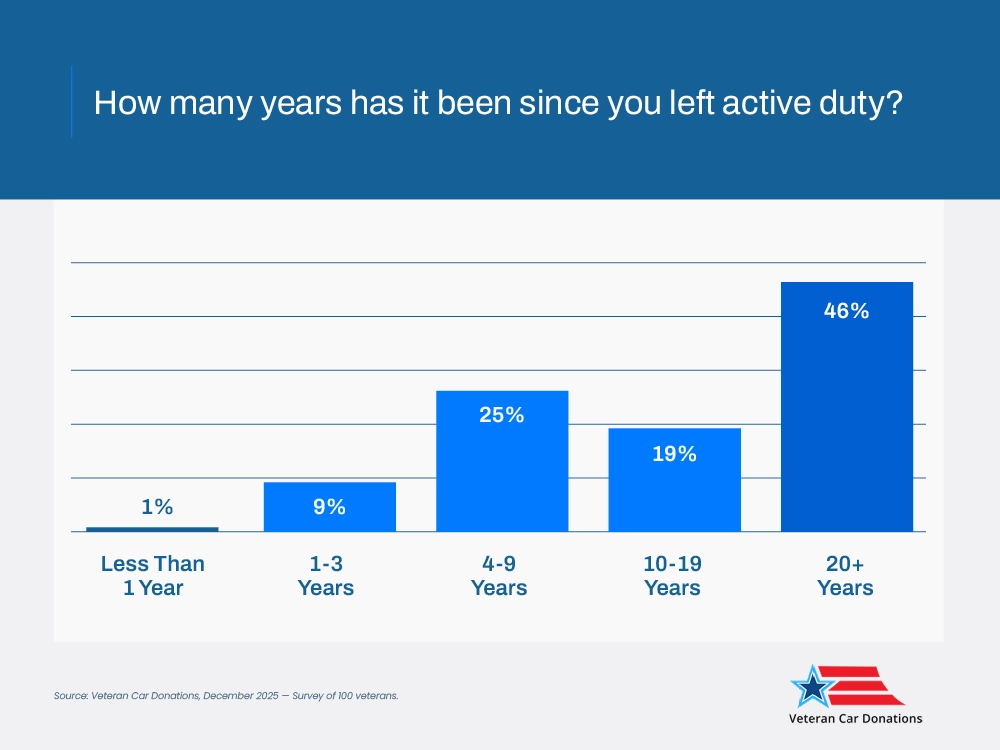
The survey shows that many veterans are far removed from their initial transition. Nearly half of respondents, 46%, left active duty more than 20 years ago. Another 19% separated between 10 and 19 years ago. Only a small portion of respondents had transitioned within the last few years.
This longer timeline changes how we understand veteran needs. Many individuals are not dealing with short-term adjustments. Instead, they are navigating long-term systems, managing evolving health needs, and working to maintain stability over time.
The Hardest Challenges Are Often System-Related
Respondents identified several key challenges during their transition, with navigating VA or government benefits ranking highest at 21%. Mental health followed at 16%, while employment, adjusting to civilian culture, and financial instability each came in at 14%.
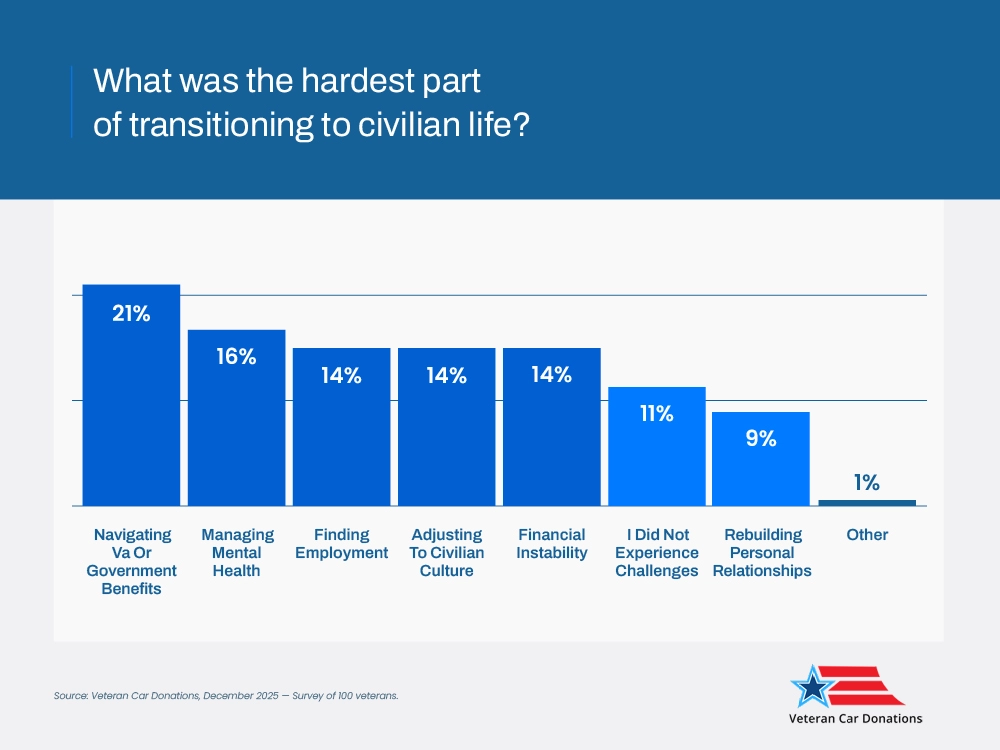
This distribution is important. It shows that while employment remains a concern, many veterans are more affected by the complexity of systems and the emotional impact of transition. Understanding how to access benefits and maintain mental well-being can become just as difficult, if not more so, than finding a job.
Many Veterans Did Not Feel Fully Prepared
Survey responses show that only 15% of veterans felt completely prepared for civilian life, while 44% felt somewhat prepared. At the same time, 30% reported feeling not prepared at all.
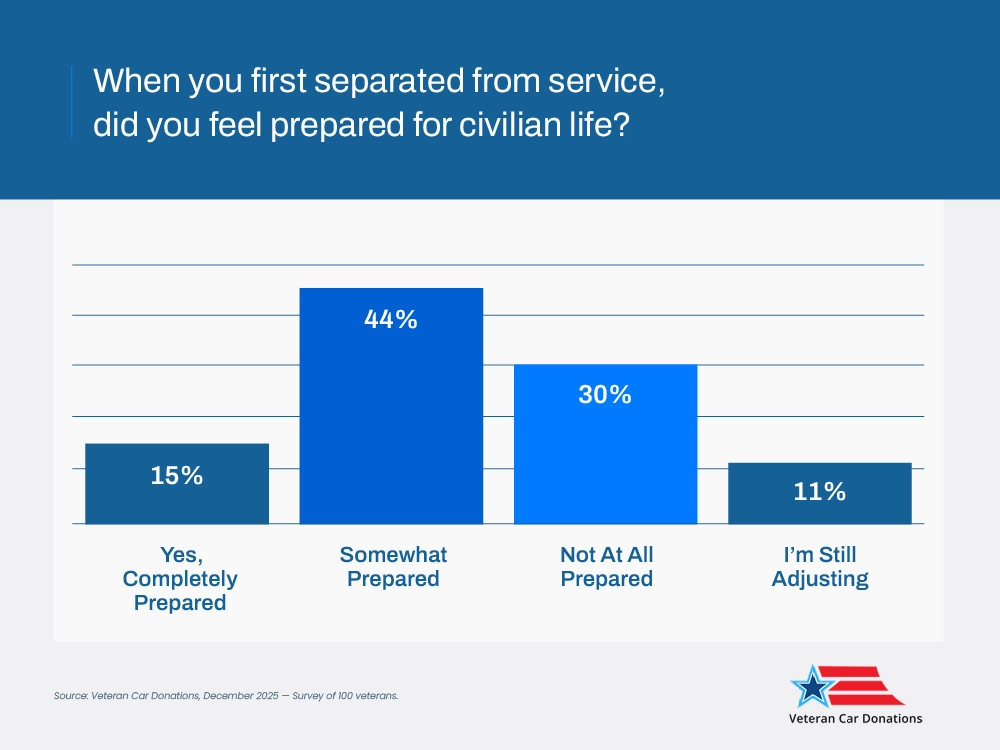
These results suggest that many veterans enter civilian life without a full sense of readiness. Even when some preparation exists, it may not fully address the realities of navigating employment, healthcare systems, and financial responsibilities outside of military structure.
Mental Health, Finances, and Healthcare Are Top Priorities
Veterans identified several areas where support is most needed today, with mental health services leading at 37%, followed closely by financial assistance and physical healthcare. Employment assistance, affordable housing, and help navigating benefits were also widely selected, each around the 30% range.
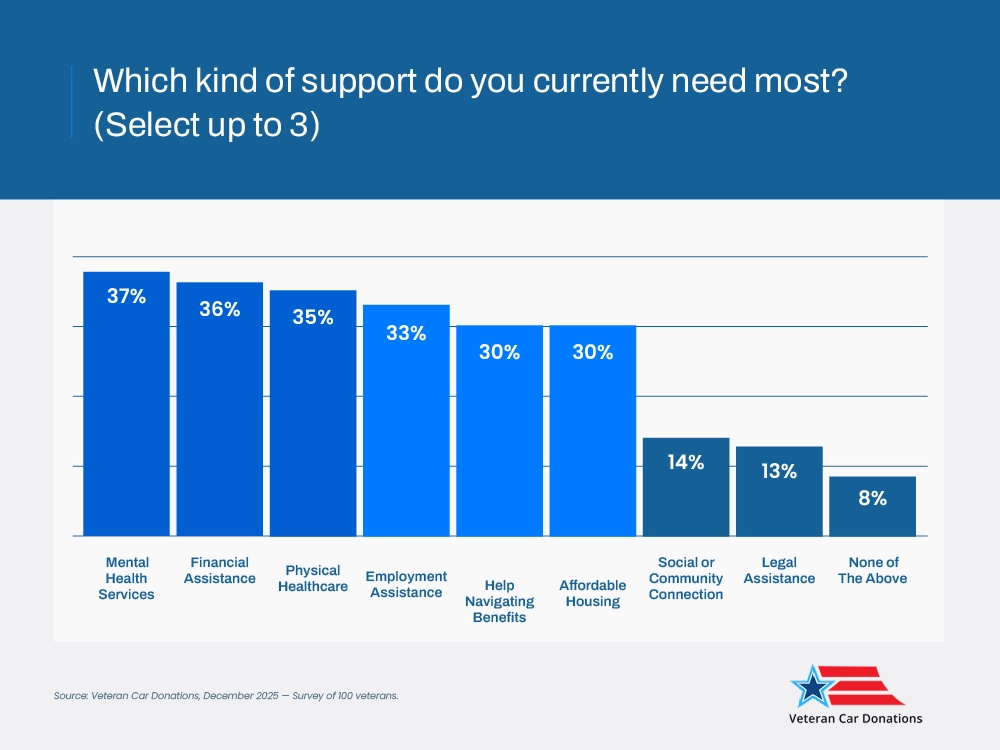
These results show that veteran needs are interconnected. Mental health, financial stability, and healthcare access are closely linked, and challenges in one area often affect others. This reinforces the need for support systems that address multiple aspects of daily life at once.
Accessing Help Remains a Challenge
When asked about barriers, 36% of veterans reported difficulty accessing VA healthcare, while 34% struggled with employment or career support. Other challenges included food and basic necessities, mental health services, housing, and transportation.
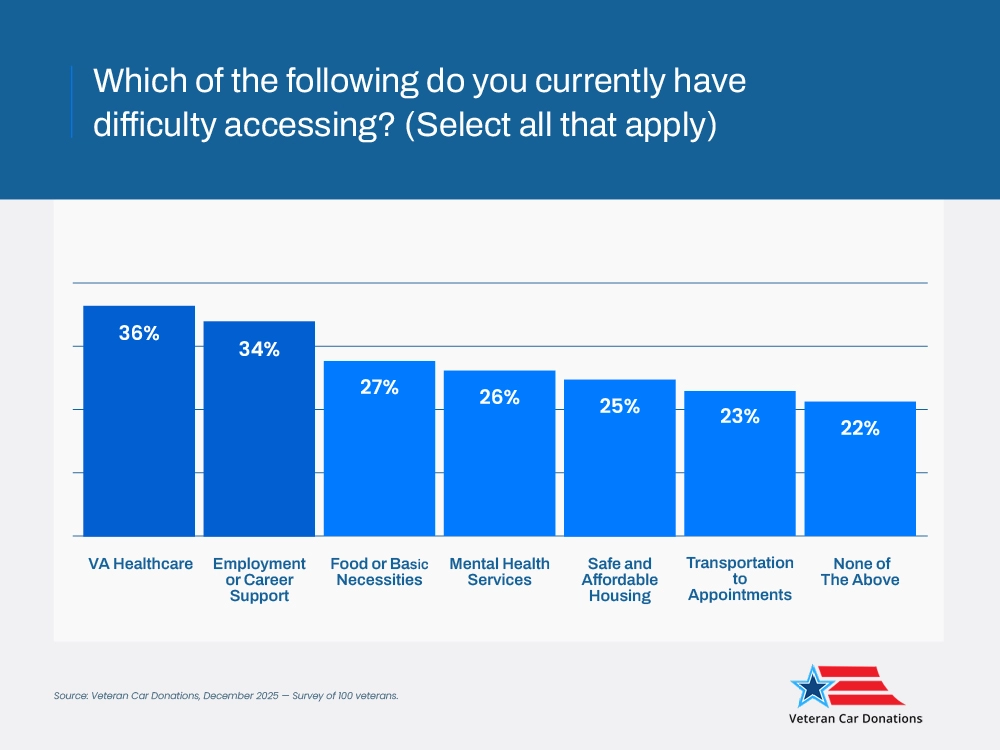
These responses highlight a gap between availability and accessibility. Services may exist, but logistical challenges, system complexity, and lack of clarity can make them difficult to use. Even smaller barriers, such as transportation, can have a significant impact on whether someone receives care.
Frustration Leads Many Veterans to Stop Seeking Help
Access to support is not only about whether services exist. It is also about whether those services feel approachable, understandable, and worth pursuing. For many veterans, the process of seeking help can become a challenge in itself.
Over time, repeated obstacles such as unclear requirements, long wait times, or difficulty finding accurate information can create a sense of fatigue. When this happens, even motivated individuals may begin to disengage.
One of the most important findings in the survey relates to disengagement from support systems.
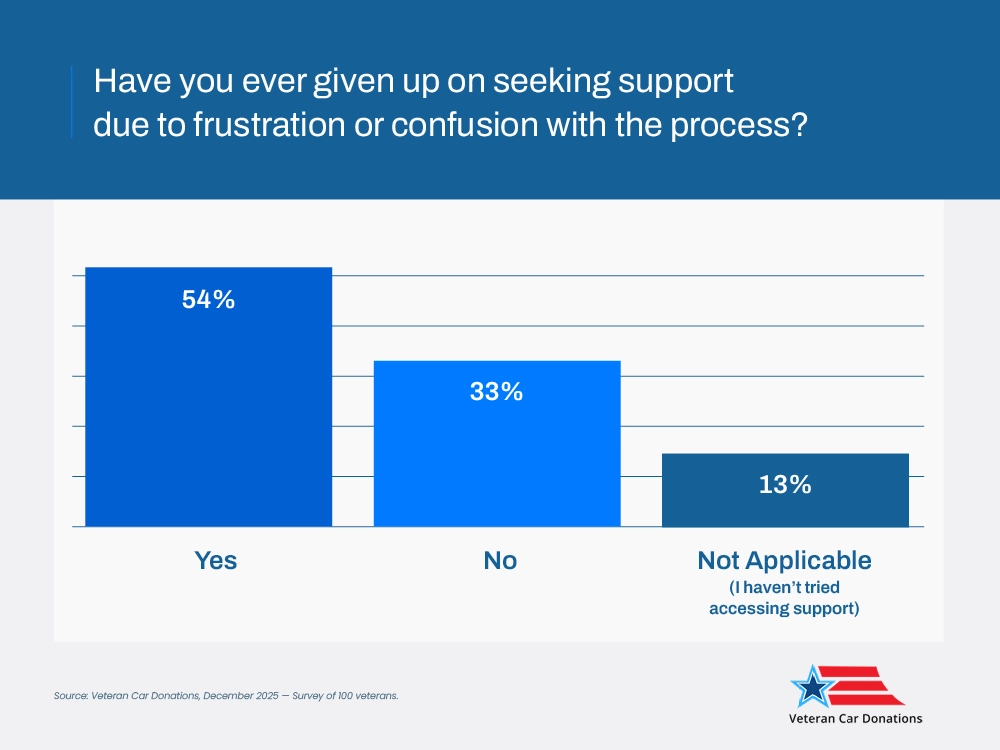
More than half of respondents, 54%, said they have given up on seeking help due to frustration or confusion.
This reflects a deeper issue within the support process. When systems are difficult to navigate or require repeated effort without clear results, it can discourage continued engagement. Some veterans may begin the process of seeking help but stop before receiving the support they need.
This pattern is also reflected in other responses:
- 56% have not received help from a veteran-focused nonprofit in the past year
- 19% are not aware of available resources
- Only 20% reported receiving help
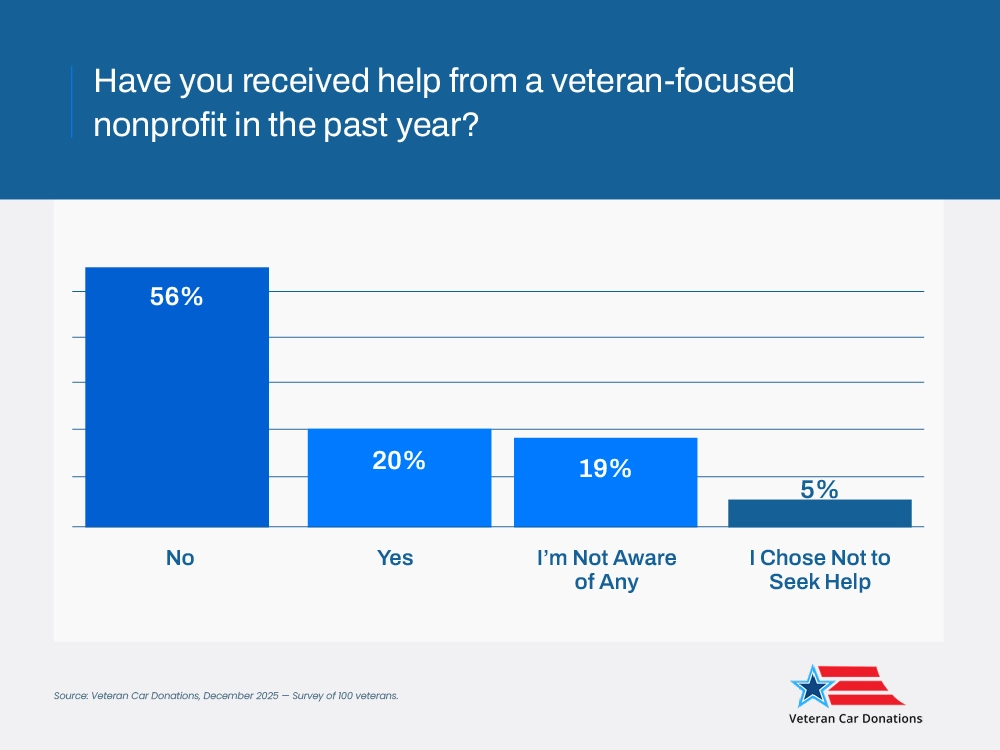
Together, these numbers highlight a gap between available services and actual access.
Stability and Simplicity Improve Quality of Life
Quality of life for veterans is shaped by more than just access to resources. It is also influenced by how manageable daily life feels and how easy it is to maintain consistency over time.
For many veterans, stability is closely tied to having reliable income, secure housing, and dependable systems that support their needs. At the same time, simplicity plays an equally important role. When processes are clear and straightforward, it becomes easier to access support and maintain progress.
When asked what would most improve their quality of life, 22% of veterans selected steady employment, and another 22% pointed to reducing bureaucracy within benefits systems. Stable housing followed at 21%, and 20% highlighted the importance of greater public understanding of veterans’ needs.
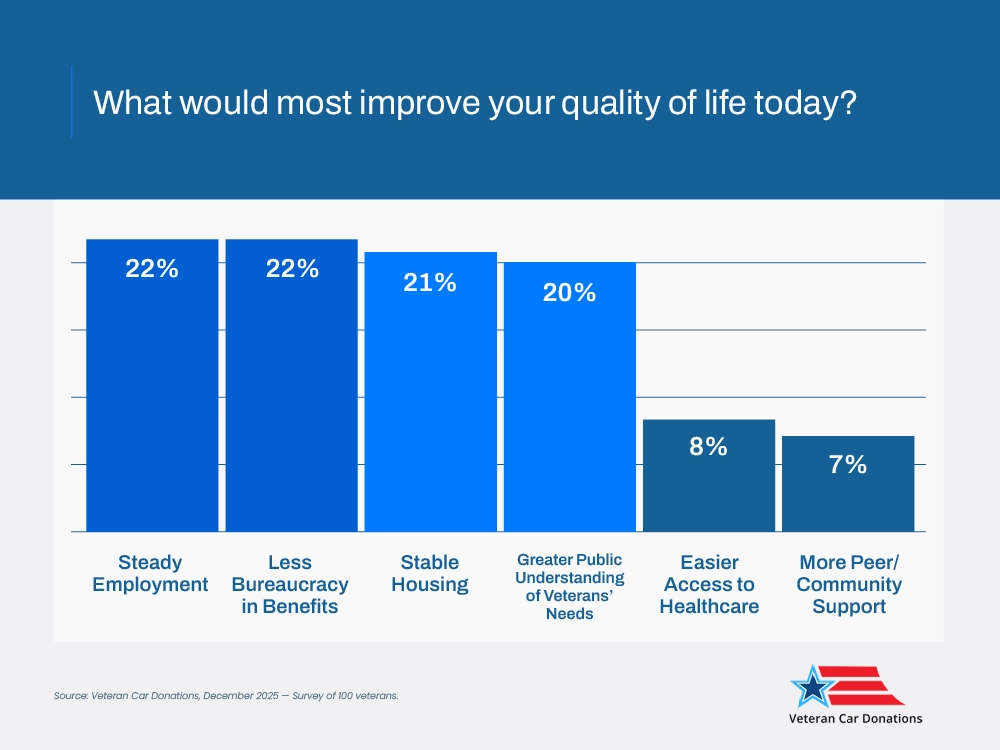
These responses show that both stability and clarity matter. Veterans are looking for consistent income, secure housing, and systems that are easier to understand and use. Public awareness also plays a role, as understanding from the broader community can influence how veterans are supported in everyday life.
Community Support Varies Widely
Support does not only come from formal programs. It also comes from the people and communities veterans interact with every day.
Local communities can play a significant role in shaping a veteran’s experience after service. They can provide connection, understanding, and informal support that complements structured services. However, the level of support available often depends on location, awareness, and opportunities for engagement.
Connection to the local community can influence access to resources, emotional well-being, and overall support.
However, community support varies widely among veterans. While 49% reported feeling very or somewhat supported, 39% said they feel not very supported or not supported at all. The remainder indicated they are not involved in their local community.
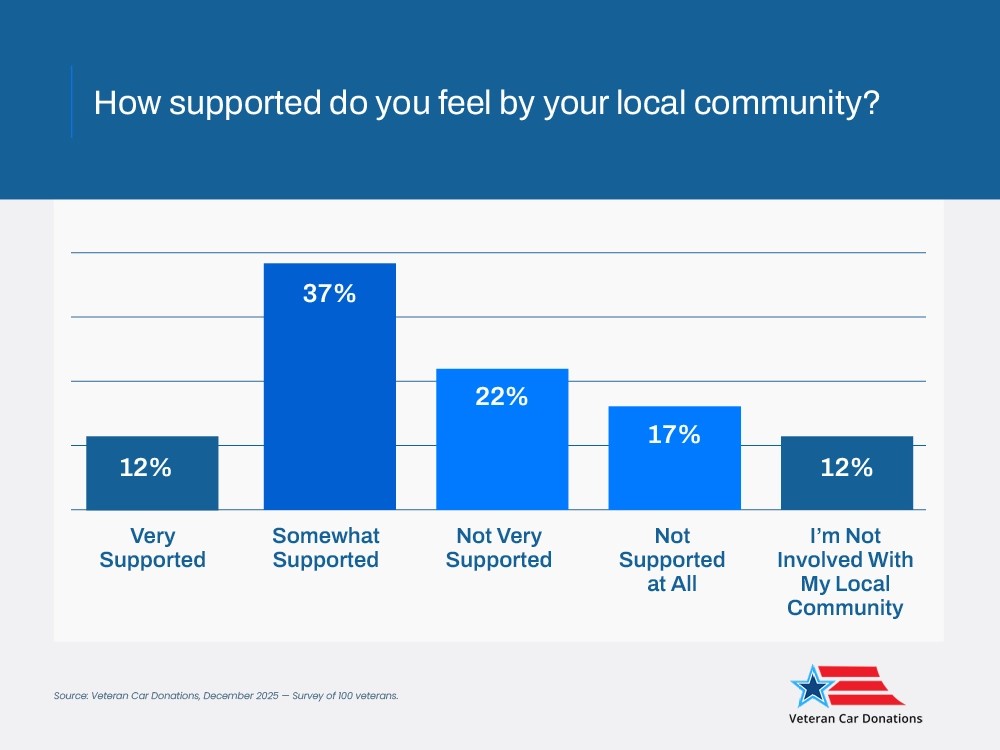
This variation suggests that support networks are not consistent across communities. Some veterans have strong connections, while others may feel isolated or disconnected. Strengthening community engagement may help improve access to support and overall quality of life.
Many Veterans Believe Support Gaps Still Exist
Individual experiences provide valuable insight, but broader perception can reveal patterns across the veteran community.
Veterans often observe not only their own challenges but also the experiences of those around them. These shared observations can highlight gaps that may not always be visible through individual data alone.
The survey also explored how veterans view support beyond their own experiences. When asked whether most veterans they know are receiving the support they need, 65% said no, while only 10% said yes. The remainder were unsure.
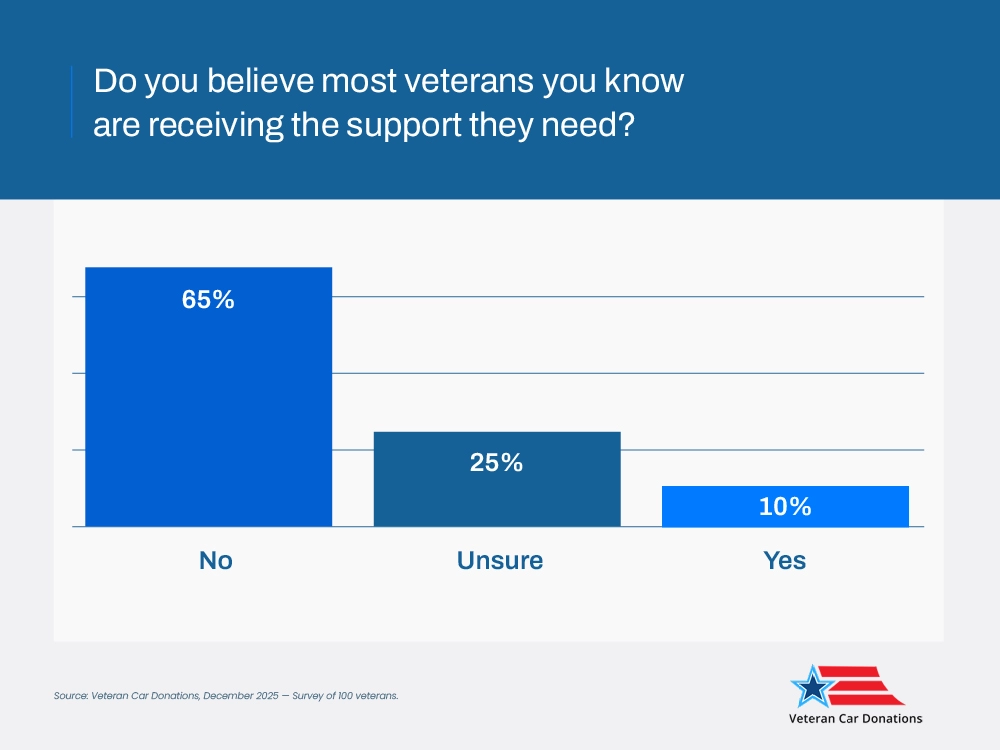
This indicates that veterans see these challenges not only in their own lives but also in the experiences of others. The perception of widespread gaps suggests a need for broader improvements across systems and services.
Where Veterans Are Receiving Support Today
Understanding where veterans currently access support helps highlight both strengths and gaps in the system.
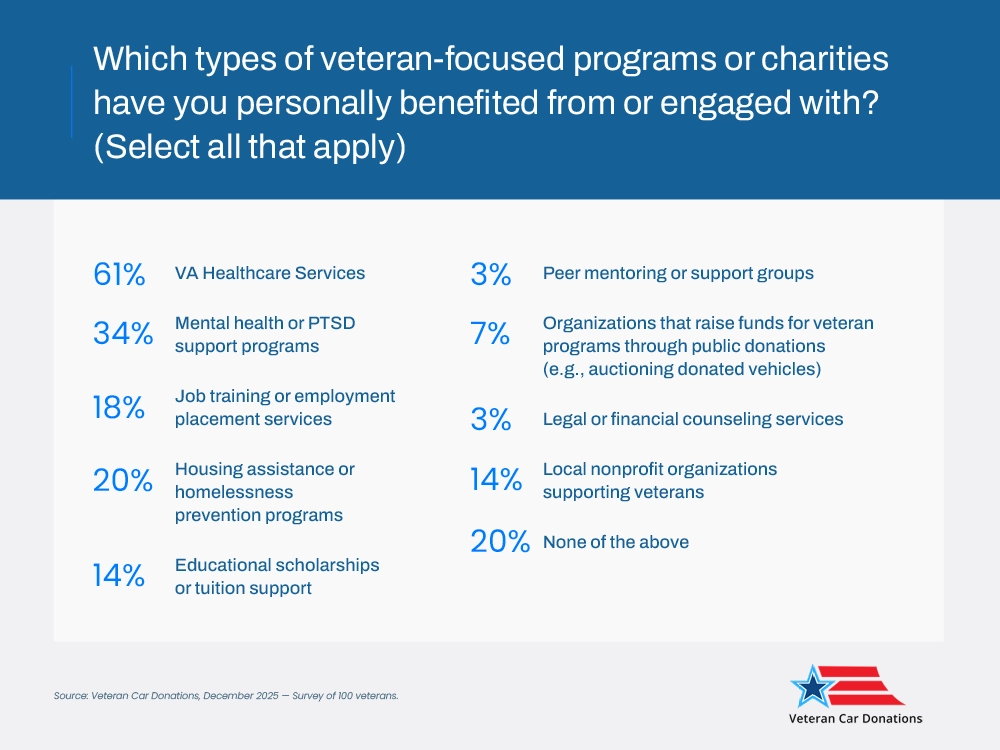
Engagement with support programs is heavily concentrated in a few areas. VA healthcare services were used by 61% of respondents, followed by mental health or PTSD programs at 34%. Participation in housing, employment, and education programs was notably lower.
At the same time, 20% of veterans reported not engaging with any of these programs. This highlights a continued gap between available services and actual participation, suggesting that awareness and accessibility remain key challenges.
How Donations Help Support Veteran Programs
While awareness is critical, ongoing support also depends on sustainable funding for the programs that serve veterans.
Many veteran-focused programs rely on funding to continue providing services. Donations can play a role in supporting these efforts.
Veteran Car Donations is not a nonprofit organization. Instead, it is a platform that helps connect donors with trusted nonprofit organizations that serve veterans and their families. These nonprofit partners provide direct services such as healthcare support, housing assistance, and mental health programs.
Vehicle donations are one way individuals can contribute. When a vehicle is donated, the proceeds go toward supporting these partner organizations and the programs they provide. While donations are not a complete solution, they can help organizations continue their work and reach more veterans.
Moving Forward
Life after service is an ongoing experience shaped by changing needs and circumstances. The survey results show that many veterans continue to face challenges related to healthcare, financial stability, housing, and access to support.
They also show opportunities for improvement. Clearer systems, better access to resources, and stronger community support can all contribute to better outcomes.
At Veteran Car Donations, we remain focused on supporting the organizations that serve veterans and helping raise awareness of the needs that still exist today.